2025年3月12日星期三

How to choose a suitable loose powder brush for beginners


How to choose the proper powder brush?

1. Hair material

Animal hair (such as goat,squirrel hair)::
  1. Advantages: strong powder holding capacity, natural smudge, suitable for dry loose powder or pressed powder.
  2. Disadvantages: high price, some sensitive skin may be allergic to animal hair.
  3. Suitable for: those who pursue delicate makeup and have sufficient budget.

Synthetic hair
  1. Advantages: high cost performance, washable, suitable for wet use (such as liquid foundation, cream products).
  2. Disadvantages: weak powder holding power, may feel slightly rough.
  3. Suitable for: limited budget, environmental protection or sensitive skin.

Suggestions for beginners: soft synthetic hair (such as nylon hair) or mixed hair (animal hair mixed synthetic hair) to balance cost performance and usability.

2. Brush head shape

  1. Round-head brush: The fluffy, large round head is suitable for full-face makeup, evenly spreads powder, and is friendly to beginners.
  2. Tongue-shaped brush: The flat design is suitable for local precise makeup (such as the T-zone), requires manual control.
  3. Flat-head brush: The dense brush head is suitable for pressing makeup and covering pores.
  4. Angled brush: Fits the facial contour, suitable for contouring or blush layering.
  5. Suggestion for beginners: The fluffy round-head brush is preferred, which is easy to operate and has a high tolerance rate.

3. Brush handle

  1. Long-handle brush: suitable for full-face operation, more stable in hand.
  2. Short-handle brush: easy to carry, suitable for detailed touch-ups.
  3. Holding: choose a non-slip material (such as a frosted brush handle), avoid being too heavy or too light.

How to judge the quality of loose powder brushes?

1. Bristle quality

  1. Touch: Touch the back of your hand or cheek lightly, high-quality bristles are soft and will not prick your face (animal hair feels more silky).
  2. Elasticity: The bristles can rebound quickly after light pressure and will not deform.
  3. Hair loss: Use your fingers to gently stroke the bristles. A small amount of floating hair is normal, but a large amount of shedding indicates poor quality.
  4. Density and fluffiness: The bristles are evenly distributed, fluffy but not loose, and can naturally restore their shape after pressing.

2. Workmanship details

  1. Connection: The connection between the brush head and the handle is tight, no glue overflow or looseness.
  2. Brush handle: The surface is smooth and burr-free, and the printing is clear and does not fall off.
  3. Symmetry: The brush head is symmetrical, no obvious skewness.

Common Misconceptions

The Softer bristles, the better
— The softness should be moderate. If too soft, it may not hold enough powder, and if too hard, the makeup will not adhere smoothly.

The bigger brush head, the better
— Large brush head is suitable for full-face makeup, but powder is easily stuck in the details (such as under the eyes), so it can be matched with a small brush.

The more expensive brush, the better
—Expensive brushes have better craftsmanship, but beginners may not need them. Practice the technique first and then upgrade the tools.


Suggested brands

1. Affordable entry-level ($7-$20/pcs)

  • Shoushoulang (Chinese local brand) HZ-1006

  • Price:$8-$11/pcs
  • Features: synthetic hair, soft and fluffy bristles, round head design suitable for full face makeup, no hair loss and no pricking
  • Suitable for: beginners with limited budget and pursuit of practicality.
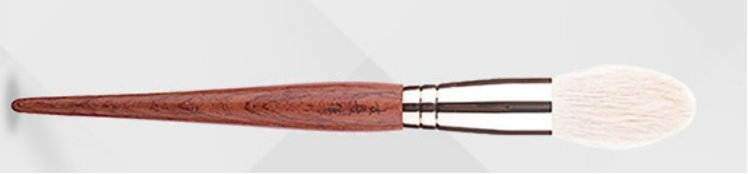
 
  • Real Techniques 300
  • Price:$11-$16/pcs
  • Features: synthetic fiber hair, large and fluffy brush head, uniform  powder holding, suitable for quick full face makeup, washable and durable.
  • Suitable for: students who like European and American tools and value cost-effectiveness.
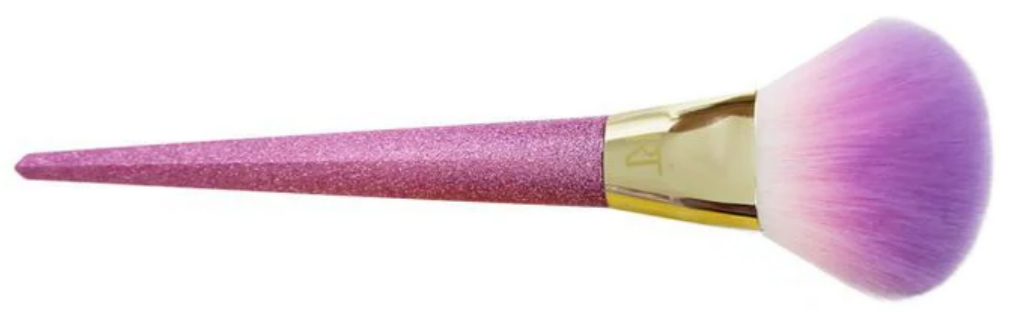
  • Energy M201

  • Price:$12-$18/pcs
  • Features: A mixture of XGF goat hair and synthetic hair, moderate powder holding power, round head design fits the face, suitable for dry or mixed skin.
  • Suitable for: Beginners who want to try the texture of animal hair but have a limited budget.
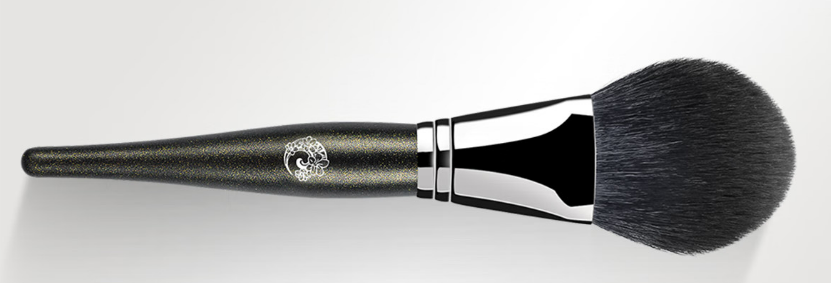

2. Mid-range advanced model($20-$40/pcs)

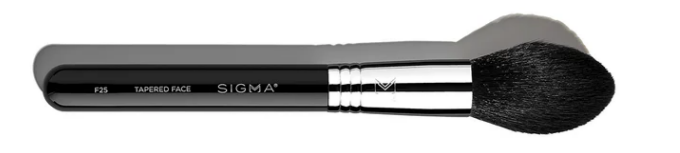
  • Sigma F25

  • Price:$28-$35/pcs
  • Features: synthetic hair, dense and elastic brush head, suitable for press-on makeup, excellent at covering pores, friendly to oily skin.
  • Suitable for: advanced party who pursues professional-grade tools and likes matte makeup effect.
 
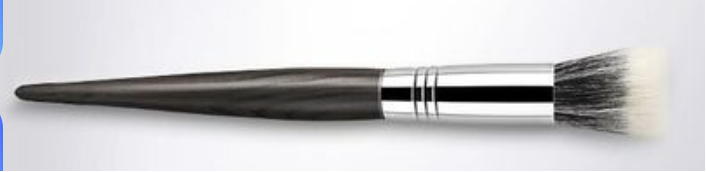
  • Qinzhi G081

  • Price:$25-$30/pcs
  • Features: A mixture of gray squirrel hair and goat hair, silky and smooth like the breeze, has strong powder-grabbing power but light makeup, suitable for sensitive skin.
  • Suitable for people: Dry and sensitive skin with high requirements for brush softness.
 

3. High-end professional (over $45/pcs)

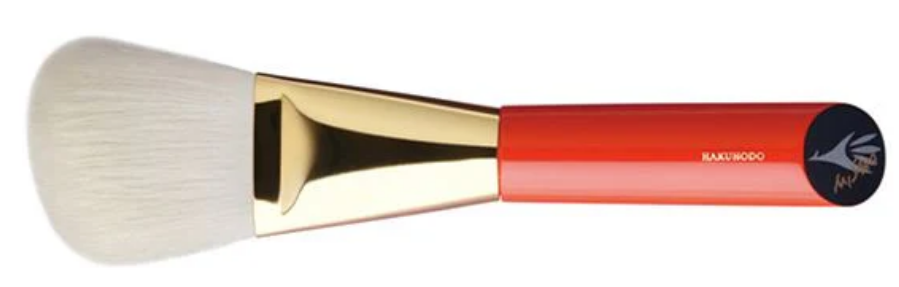
  • Hakuhodo S100

  • Price:$55-$70/pcs
  • Features: Top-grade goat hair, full hair volume, precise powder-grabbing ability, polishing makeup, Japanese lady experience.
  • Suitable for: Makeup enthusiasts with sufficient budget and pursuit of ultimate makeup effect.
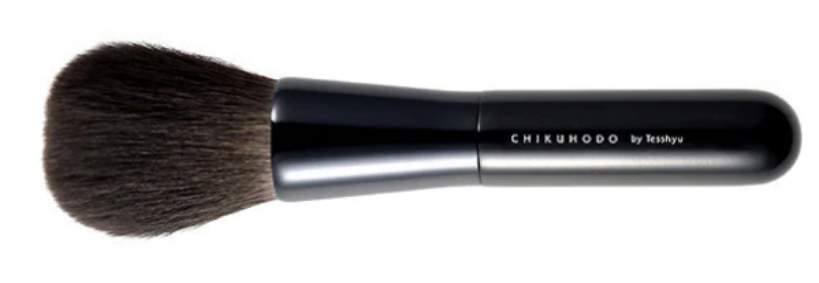
  • Chikuhodo Z9

  • Price:$83-$95/pcs
  • Features: The ceiling made of gray squirrel hair, feels cool and smooth, suitable for light makeup, perfect for dry skin, and has a service life of more than 10 years.
  • Suitable for: Collectors or players who are obsessed with tool quality.
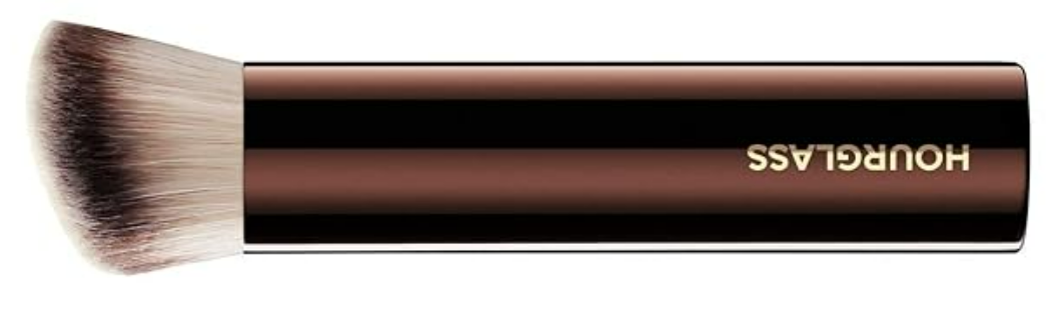
  • Hourglass Vanish

  • Price:$70-$80/pcs
  • Features: Synthetic hair + unique pyramidal design, precise control of dosage, suitable for use with pressed powder or mineral loose powder.
  • Suitable for: high-end users who like innovative design.


Selection advice for beginners

  1. Budget <$15: Shoushhoulang HZ-1006 or Real Techniques 300, synthetic hair is durable and easy to wash.
  2. Budget around $30: Choose Qinzhi G081 or Sigma F25, taking into account both material and function.
  3. Sensitive skin/dry skin: Prioritize gray squirrel hair (Chikuhodo Z series, or be replaced by Qinzhi).
  4. Oily skin/need concealer: Choose a dense flat brush (such as Sigma F25).
  5. Beginner purchase formula: Demands(full face makeup) + budget (around $15 ) + material (synthetic hair/mixed hair) + brush type (round head) = cost-effective entry-level loose powder brush.

Use and maintenance recommendations

  1. Cleaning frequency: Clean once every 1-2 weeks, using professional brush cleaning agent.
  2. Drying method: Hang the brush head downward to prevent water from flowing into the brush handle and causing degumming.
  3. Storage: Avoid moisture or exposure to the sun, and use a protective net to maintain the shape of the brush head.

2025年3月11日星期二

common wooden handle types

 Wood is the most popular handle material of makeup brushes due to its natural texture and degradable. There are many wood types, what are the common wooden materials used in makeup brushes?

 
The following is a detailed description of the common wooden handle materials of makeup brushes, as well as their characteristics and pro/cons in different level makeup brushes,for customers’ reference during OEM makeup brushes.

Common wooden types

1. Solid wood

TypeFeaturesApplications
Birch- Density 0.55-0.75g/cm³, straight and fine texture
- Easy to dye, low cost
Normal makeup brushes, mass-produced
Ebony- Density 1.2-1.3g/cm³, high hardness (Janka value 3200)
- Natural dark black, no need dyeing required
High-end luxury brushes, collection-level products
Cherry- Density 0.6g/cm³, warm red color and deepens over time
- Poor crack resistance (need coating protection)
Retro-style brushes, niche designer brands
Walnut- Density 0.65g/cm³, chocolate-colored stripes
- Medium to high deformation resistance (water content needs to be controlled at 8%-10%)
Mid-to-high-end professional brushes
Bamboo- Density 0.7-0.9g/cm³, naturally antibacterial
- Longitudinal fiber structure, high bending strength
Environmentally friendly brushes, portable travel makeup brushes
 

2.Composite material

TypeFeaturesApplications
Wood Plastic Composites- Wood powder + PE/PP substrate (wood accounts for 40%-60%)
- Good moisture resistance, can be injection molded into complex shapes
Low-cost moisture-proof, outdoor makeup brushes
Multilayer Glued Laminated Timber- Cross-linked thin wood slices glued together
- Cracking resistance increased by 3 times, but the texture is more industrial
Large brush handle (for example body brushes)
Resin impregnated wood- Vacuum impregnation of wood with epoxy resin
- Hardness increased by 50%, mildew and antibacterial (cost ↑30%)
High-end waterproof brushes and medical beauty tools
 

Key Performances Comparison

IndexBest materialWorst MaterialKey data reference
Moisture resistanceResin impregnated wood (water absorption <3%)Cherry wood (water absorption 12%)The equilibrium moisture content should be controlled at 8%-12%
Wear resistanceEbony (Mohs hardness 5.5)Birch (Mohs hardness 4.0)Surface coating can increase the hardness by 1-2 levels
LightweightBamboo (density 0.7g/cm³)Ebony(Density 1.3g/cm³)Hollow structure can reduce weight by 40%
CostBirchEbonyCNC engraving costs about $1/minute
Eco friendlyFSC certified bamboo (biodegradable)Wood plastic material (including PE/PP)The carbon footprint of a pure solid wood handle is 60% lower than that of plastic


Processing

1. Wood pretreatment
  1. - Drying: Kiln drying to moisture content of 8%-12% (natural drying takes 6-12 months, kiln drying shortens to 2 weeks)
  2. - Stabilization: Resin curing (to prevent cracking) or wax impregnation (to improve gloss)
 
2. Shaping
  1. Turning and engraving: CNC machine processing accuracy ±0.1mm, suitable for complex patterns (such as spiral patterns, relief)
  2. Jointing technology: Finger joint mortise and tenon structure (strength is 20% higher than gluing) or veneer (0.5mm rare wood veneer + base material)

3. Surface treatment

TypeEffectCost increaseDurability
Water-based paint sprayingMatte/glossy, environmentally friendly and odorless+$0.4-0.7/pcsScratch resistance (500 times steel wool test)
Wood wax oil penetrationPreserve the wood feel and highlight texture+$0.7-1.4/pcsNeed reapply every 6 months
UV Curing CoatingHigh hardness (3H pencil hardness), chemical resistance+$1.4-2.1/pcsAlcohol wiping resistance > 1000 times
 

Some pseudo-concepts
 
1. "Hundred-year-old wood"
- The truth: The stability of wood has no direct relationship with the age of the tree. The moisture content of 100-year-old wood may be higher, and easy to deform.
2. "Pure hand-carved"
- The truth: 99% of mass-produced wooden handles are CNC-carved, and only the final polishing is done by hand (the labor time accounts for <5%).
3. "Nano-mildewproof"
- The truth: The type of mildewproof agent is not specified (such as toxic TCMTB), to comply, should use IPBC (cost is 3 times higher).
 

Selection suggestions

1. High-end luxury makeup brushes
  1. - Material: ebony/rosewood + lacquer
  2. -Process: hand-painted more than 7 layers, inlaid with mother-of-pearl/gold foil
2. Common makeup brushes
  1. - Material: FSC certified birch + UV coating
  2. - Process: hollow design to reduece weight, laser engraved LOGO
3. Environmental protection makeup brushes
  1. - Material: bamboo + wood wax oil
  2. - process: Keep the natural shape of bamboo joints, no glue mortise and tenon joints

 Trends
  1.  Lightweight: Ultra-thin bamboo lamination technology (thickness 0.5mm, strength comparable to solid wood)
  2. Intelligent Fusion: Capacitive touch chip embedded in wooden handle (function achieved through differences in wood conductivity)
  3. Cultural Empowerment: Traditional wood carving craft + modern design


Precautions
  1. - Prevention of cracking: The recommended moisture content is ≤10% in areas south of 35°N, and ≤12% in areas north of 35°N
  2. - Environmental certification: FSC/PEFC certificates are required for Europe and the United States markets
  3. - Allergy risk: Some wood contains natural volatiles (such as ebony sawdust can cause respiratory irritation)
 
When choosing a wooden handle makeup brush, customers need to balance the texture, cost, and use environment, and be wary of "low-price solid wood" (mostly veneer composite materials). It is recommended to ask the makeup brush manufacturers to provide wood traceability certification and moisture content test report to ensure quality stability.


2025年3月6日星期四

“pseudo-concepts” in the makeup brush industry**

 Due to technical improvement and rapid development of makeup brush industry, users can always hear of many new concepts and black technologies in the brands’ marketing rhetoric. Users may be confused and dazzled by such concepts, and in fact, some of them are "pseudo-concepts".

 
The following is an in-depth analysis of the common "pseudo-concepts" in the makeup brush industry, for users reference and then avoid consumer traps:


Pseudo-concepts on materials

1. "100% natural animal hair"
 
Pseudo-concept :
  1. Claiming”pure goat hair/squirrel hair", but actually blending synthetic hair or low-quality animal hair (such as raccoon hair pretending to be sable hair).
  2. Using "animal hair scraps" but labeling them as high-quality hair (hair scale damage rate > 40%).
 
The truth:
  1. EU regulations require that only animal hair content≥95% can be labeled "pure natural", but most brands did not send them to third-party institutions for inspection.
  2. Infrared spectroscopy can identify the blending ratio.
 
2. "Nano-level antibacterial bristles"
 
Pseudo-concept:
  1. Adding trace amount of nanosilver (concentration <10ppm), then claiming "99.9% antibacterial", but it actually loses effectiveness after 5 washes.
  2. Confusing the concepts of "antibacterial" and "bacteriostasis" (antibacterial requires active killing of microorganisms, but most products only delay bacterial reproduction).
 
The truth:
  1. Effective antibacterial must meet the ISO 20743 standard (antibacterial rate >70% and durability meets the standard).
  2. The cost of real nanosilver coating increases by $0.25-0.4/gram, which is difficult to achieve with low-priced products.
 
3. "Degradable and eco-friendly brush handle"
 
Pseudo-concept:
  1. PLA material is only used in part of the handle (accounting for less than 30%), but the whole handle is labeled "degradable".
  2. Degradation conditions are not specified (industrial composting ≠ natural degradation, it may not decompose for a hundred years in a home environment).
The truth:
  1. Compliance certification must pass ASTM D6400 (degradation of more than 90% in industrial composting in 180 days).
  2. Beware of "greenwashing" brands: check the TÜV or BPI certification number.


Pseudo-concept on craft

1. "Purely handmade"
 
Pseudo-concept :
  1. Only the final assembly process is manual(such as labeling), but claim to be "100% handmade".
  2. Using CNC engraving and manual polishing, blurs the essence of "semi-mechanized".
 
The truth:
  1. The cost of real hand-made brushes is high
  2. Detection method: Observe the consistency of the hair peak (the tolerance of the hair tip angle of machine-planted hair<2°, but manual hair >10°).
 
2"Aerospace-grade metal material"
 
Pseudo-concept:
  1. Mark the Ordinary 6061 aluminum alloy as "aerospace aluminum" (the actual aerospace grade is 7075-T6, with over 3 times cost).
  2. "Titanium alloy brush handle" is actually titanium-clad steel (titanium layer thickness <0.1mm).
 
The truth:
  1. Aerospace materials must comply with AMS or GB/T 3191 standards, require the material warranty.
  2. The density of a real titanium alloy brush handle is 4.5g/cm³ (significantly lighter than 8g/cm³of stainless steel).
 
3. "Magnetic suspension brush head"
 
Pseudo-concept:
  1. Claims “Ordinary magnet” to be "magnetic suspension" (real magnetic suspension requires active electromagnetic control, cost> $7/piece).
  2. The rotating brush head actually uses plastic buckles + springs, and its life span is only 3,000 rotations.
 
The truth:
  1. Real magnetic suspension requires patented technology (such as Japan's Nidec brushless motor solution), and the noise is <20dB.
  2. Disassembly verification: Check whether it contains coils and sensors (pseudo-concept products only use neodymium magnets).


Functional pseudo-concept

1. "Smart temperature-sensing bristles"
 
Pseudo-concept:
  1. Ordinary PBT bristles + temperature-changing pigments (cost $0.01/g), but claim to "adjust powder gripping according to body temperature".
  2. Unable to quantify the temperature control range (such as claiming "32-37℃ adaptation", the actual temperature difference response is >5℃).
 
The truth:
  1. True temperature-sensing materials require phase-changing microcapsules (such as Outlast®, license fee $0.7/g).
  2. Verification method: Use a constant temperature water to test the bristle deformation response speed (true materials change within ±1℃).
 
2. "Ultrasonic hair transplantation technology"
 
Pseudo-concept:
  1. Claim “ordinary mechanical hair transplantation” (tolerance±0.3mm) as "nano-level precision".
  2. Claim"zero glue and environmental protection", but actually using hidden glue grooves (the amount of epoxy resin is the same).
 
Truth:
  1. True ultrasonic hair transplantation requires 20kHz high-frequency vibration welding (equipment unit price > $100K), and glue is reduced by 80%.
  2. Inspection method: Observe the hair roots under a microscope to see if they are melted and bonded (pseudo-concepts still have colloid residue).
 
3. "Negative ion skin care brush"
 
Pseudo-concept :
  1. Embed ordinary ceramic beads in the brush handle (negative ion release <100 ions/cm³), but claim "anti-oxidation".
  2. Confusing "negative ions" with "electron release" (true negative ions require ionized air, and the brush has no power supply).
 
Truth:
  1. Effective negative ion concentration must be >2000 ions/cm³(professional detectors can measure, such as COM-3200).
  2. Actual effect: psychological comfort > measured data (human perception threshold is much higher than product release).


Guide to Anti-Scams

1. From Data

Ask for specific parameters:
  1. Pseudo concept: "Super strong powder holding" → Real data: "Hair scale density > 200 pcs/mm²".
  2. Pseudo concept: "Military-grade strength" → Real standard: "Complies with MIL-STD-810G drop test".
 
2. From Cost

Material cost bottom line:
  1. Claim "pure copper brush handle" but selling price < $7→ must be copper-clad steel (copper price $7/kg).
  2. "24K gold-plated brush" unit price <$27 → coating thickness < 0.1μm (real electroplating cost >$4/piece).
 
3. Third-party verification

Required to provide:
  1. SGS/TÜV test report (focus on the test method, such as whether the antibacterial rate is in accordance with ISO 22196).
  2. Material traceability certificate (such as AMS number for aluminum, CITES certificate for animal hair).


Industry jargon translation

Marketing TalkTruthSuggestions
Handcrafted80% of the processes are machine-madeRequest production line video
Pore-level precision makeup applicationBristle diameter 0.2mm (no difference from ordinary brushes)Request electron microscope tip detection image
EU environmental certificationOnly the packaging box is FSC certifiedCheck whether the certificate number covers the product body
Patented technology supportAppearance patent (non-core technology)Check patent number and confirm type (invention/utility model)


Summary

  1. Beware of "all-round products": one brush can be used for foundation + eyeshadow + contouring → actually each performance compromises.
  2. Believe in the physics law: claim "zero gravity feel" but use a solid copper handle → density contradiction.
  3. Pay attention to hidden costs: low-price "pure animal hair brushes" may omit the cruelty free process.

The progress of the industry needs to be driven by rational consumption. Next time you encounter a "black technology brush", you might as well ask: "Is physics/chemistry allowed to achieve this effect?"

2025年3月5日星期三

Mainstream synthetic hair types

 More than 90% of makeup brushes are made of synthetic bristles, but there are various synthetic fibers with different performance for different makeup applications. So during communication with makeup brush manufacturers, customers’ should clarify the exact synthetic fiber type they need, so that the makeup brush factory can produce makeup brushes accordingly.


This article introduces the mainstream synthetic bristles of makeup brushes on the market and their performance comparisons, covering material characteristics, process differences and applications.


Mainstream synthetic hair types and characteristics

1. Nylon

Material structure
Monofilament/composite filament (multiple strands of filaments twisted together)
Cross-sectional shape: round (basic), trilobal (to improve powder grip)

Performance parameters
Denier: 3D (ultra-fine soft hair) ~ 15D (highly elastic hard hair)
Elastic recovery rate: ≥85% (better than polyester)

Representative technology
Japanese Taklon® (Toray patented rounding process, hair tip roundness error <5μm)
German Koltolon® (low-temperature plasma treatment, reducing electrostatic adsorption)

Applications
Foundation brush (high-density 15D hard hair)
Eyeliner brush (3D ultra-fine tip)

2. PET/PBT

Material variants
Ordinary PET: Lowest cost, easy to generate static electricity
Modified PBT: Improve heat resistance through copolymerization (softening point 220℃)
Ultra-fine PET: 0.05-0.1 denier (imitation of animal hair touch)

Core technology
Tip rounding: laser cutting + ceramic wheel polishing (reduce skin irritation)
Gradient hair transplantation: thick hair root (10D) → fine hair tip (3D) to achieve layered powder grabbing

Applications
Loose powder brush (fluffy PBT hair)
Blush brush (gradient PET hair)


3. Bionic synthetic hair

Bio-based materials
Plant protein fiber (soybean/corn extracted, biodegradability ≥ 60%)
Alginate fiber (antibacterial rate>99%, suitable for sensitive skin)

Structural bionics
Goat hair imitation: hollow microporous structure (30% increase in thermal insulation)
Sable hair imitation: scaly surface treatment (powder holding capacity close to 90% of natural hair)

Applications
High-end powder brush (imitation sable hair)
Children's makeup brush (antibacterial seaweed fiber)

4. Functional modified fiber

Antistatic
Carbon nanotube coating (surface resistance <10⁶Ω)
Ionic liquid modification (lasting antistatic >6 months)

Antibacterial
Nanosilver embedded fiber (antibacterial rate >99.9%, meet AATCC 100 standard)


Key performance comparison

IndexNylonPETPBTBionic synthetic hair
Softness★★☆★★★★★★★★★★★★
Powder holding★★★★★★★★★☆★★★★★
Antistatic★★☆★☆★★★★★★★
Durability★★★★★★★★★★★★★★☆
Environmental protection★☆★★★★★★★★★★
CostUSD/g$0.1~0.16$0.04~0.08$0.13~0.2$0.33~0.66


Process innovation

Special-shaped cross-section technology
Star-shaped cross-section: 30% increase in surface area (improves the ductility of liquid products)
Grooved fibers: longitudinal micro-grooves store powder (reduces flying powder by 50%)

Tip treatment solution
Ultra-fine grinding: nano-aluminum oxide polishing (skin contact angle <15°, suitable for sensitive skin)
Segmented taper: 0.3mm→0.05mm three-level gradient (precise eyeliner drawing)

Compound hair transplantation process
Nylon + PET mixed transplantation: hard hair support + soft hair touch skin (patented foundation brush design)
Magnetic hair transplantation: replaceable brush head (Sigma magnetic suction system)


Selection suggestions

Professional makeup brushes
Recommended materials: high-density nylon (15D) + imitation sable composite hair transplantation
Process requirements: 0.1mm precision laser cutting, hair density > 200 strands/cm²

Daily portable brushes
Recommended materials: antistatic PBT (7D) + antibacterial coating
Process requirements: hollow tubular structure reduces weight by 30%

Environmentally friendly concept brushes
Recommended materials: corn protein fiber + water-based UV curing coating
Process requirements: low-temperature injection molding to avoid decomposition of biomaterials


Trends

Intelligent materials
Conductive fiber bristles (detecting the amount of powder taken by resistance change)
Shape memory alloy wire (automatically restores the brush shape)

Microecological adaptation
PH responsive fiber (adjusts the powder release speed according to the PH of the skin)
Probiotic coating (maintains the balance of bacteria on the surface of the bristles)

Zero-waste production
3D woven seamless brush head (reduces the use of hair-planting glue)
Recycled hair material regeneration technology (Shiseido has achieved a 30% recycled hair ratio)


FAQ

Q:Can synthetic hair completely replace animal hair?
A:In terms of powder holding power and skin affinity, top-grade bionic hair (such as Japanese kuromori imitation gray squirrel hair) is close to 90% of the performance of natural hair, but the cost is 2-3 times that of natural hair.
 
Q:How to choose bristles for sensitive skin?
A:1st choice is Ultra-fine rounded PET (denier ≤ 3D) or alginate fiber ,avoid using untreated coarse nylon hair (contact angle >45° is easy to irritate).

Q:How to extend the life of synthetic hair?
A:Suggestions: ① Choose PBT material (excellent heat resistance); ② Use neutral detergent; ③ Put a net on brush head when drying in the shade to prevent hair from frying.


Through the combination of material science and precision manufacturing technology, modern synthetic hair has broken through the traditional performance limitations. Brands should choose differentiated solutions based on product positioning (professional/mass/environmental protection), while paying attention to the EU (EU) 2023 new regulations on plasticizer restrictions in synthetic fibers.


2025年3月4日星期二

The makeup brush trends in 2025

 The makeup brush design in 2025 will deeply integrate technology, sustainable concepts and personalized needs, and promote the development of beauty tools in a smarter, more environmentally friendly and efficient direction. The following are the innovative designs and trend forecasts of makeup brushes in the future, for customers’ reference during design and OEM makeup brushes:


The core innovative design of makeup brushes in 2025
 
Smart makeup brush
  1. AI technology integration: The brush handle has a built-in micro sensor that analyzes skin conditions (such as moisture and oil) by connecting to a mobile phone APP, and recommends appropriate foundation amount or eyeshadow color.
  2. Adaptive force control: Automatically adjusts the vibration frequency according to the usage scenario (such as concealer or smudge) to improve the accuracy of makeup application.
  3. Learning user habits: Record users’ preferences (such as holding angle and force) and optimize the subsequent usage experience through algorithms.
 
Sustainable material revolution
  1. Plant-based bristles: use biodegradable bristles made from corn fiber, bamboo fiber or seaweed extract,to replace traditional animal hair and plastic synthetic bristles.
  2. Zero waste design: The brush handle uses recyclable metal or 3D printed bioplastic, which supports modular disassembly (such as replacement brush head + permanent handle).
  3. Carbon footprint label: Brush brand discloses the carbon emissions of each brush production to promote consumers' environmentally friendly choices.
 
Multifunctional beauty tools:
  1. Beauty instrument + makeup brush: The brush head integrates microcurrent or radio frequency function, which promotes the absorption of skin care products while applying makeup (such as foundation brush combined with anti-aging technology).
  2. Temperature control technology: The bristle heating function helps cream products (concealer, highlighter) fit better on the skin, or the cooling function calms sensitive skin.
  3. Magnetic deformable brush head: A single handle matches variable brush heads (fan-shaped, tongue-shaped, cone-shaped), which can be switched by magnetic suction.
 
Health and safety upgrade
  1. Self-cleaning system: built-in UV-C ultraviolet sterilization or electrolyzed water cleaning technology to prevent bacteria from growing on the bristles.
  2. Anti-allergic coating: The bristle surface is covered with a nano-level antibacterial layer, suitable for sensitive skin and fragile skin after medical beauty.


Major trends of makeup brushes in the future
 
Technology empowers personalized beauty
  1. Through AI algorithms and user data, customize the exclusive brush head shape and density, to suit different face shapes and eye shapes (such as dedicated eyeshadow brushes for single eyelids).
  2. AR virtual makeup trial + physical tool: After the APP scans the face, the smart brush vibrates to indicate the eyeshadow range or contouring position.
 
Minimalism and functionality balance
  1. Invisible design: The brush handle uses matte touch material and neutral tones (sand dune, fog gray), which is suitable for minimalist aesthetics.
  2. Portable and deformable structure: retractable brush handle or folding design, reducing the volume (such as a lipstick-sized loose powder brush).
 
Culturally inclusive design
  1. Customized tools for different skin types and skin tones,break the "one size fits all" tradition.
  2. Braille label and anti-slip design on the brush handle to for people with disabilities.
 
Brand crossover and art collaboration
  1. Collaborate with digital artists to launch NFT virtual makeup brushes. Buying a physical brush can unlock AR filters or metaverse image skins.
  2. Luxury co-branded models (such as Hermès craft brush handles + sustainable bristles) for high-end collection market.
 
Subscription and circular economy
  1. Subscribe to monthly brush head replacements, and recycle old bristles into new products.
  2. The brand launches a "trade-in" program to encourage consumers to return discarded brush handles.


 Representative cases
  1. Hourglass: In 2024, a carbon-neutral makeup brush series has been launched,the brush handles are made of recycled ocean plastic.
  2. Fenty Beauty: In 2025, it plans to release the "AI Sculpt Brush", which guides users on the contouring angle through an APP.
  3. Shiseido: Cooperated with Panasonic to develop a "warm foundation brush" that uses temperature differences to improve the fit of foundation.
  4. Emerging brand Doe: The main product is "100% compostable" brushes, and the packaging is made of mycelium materials.


 Consumer demand drivers
  1. Efficiency first: Fast-paced life requires "one-click precision" tools to reduce trial and error costs.
  2. Ethical consumption: Generation Z promotes the popularity of cruelty-free and low-carbon products.
  3. Technology dependence: The deep integration of beauty and health data has become a rigid demand.


In 2025, makeup brushes will not only be tools, but also "future beauty carriers" that combine data, environmental protection and art. Makeup brush manufacturers need to find a balance between technology R&D and user insights to seize market opportunities.