2026年5月23日星期六

Why makeup brush wooden handle is heavier than plastic handle?


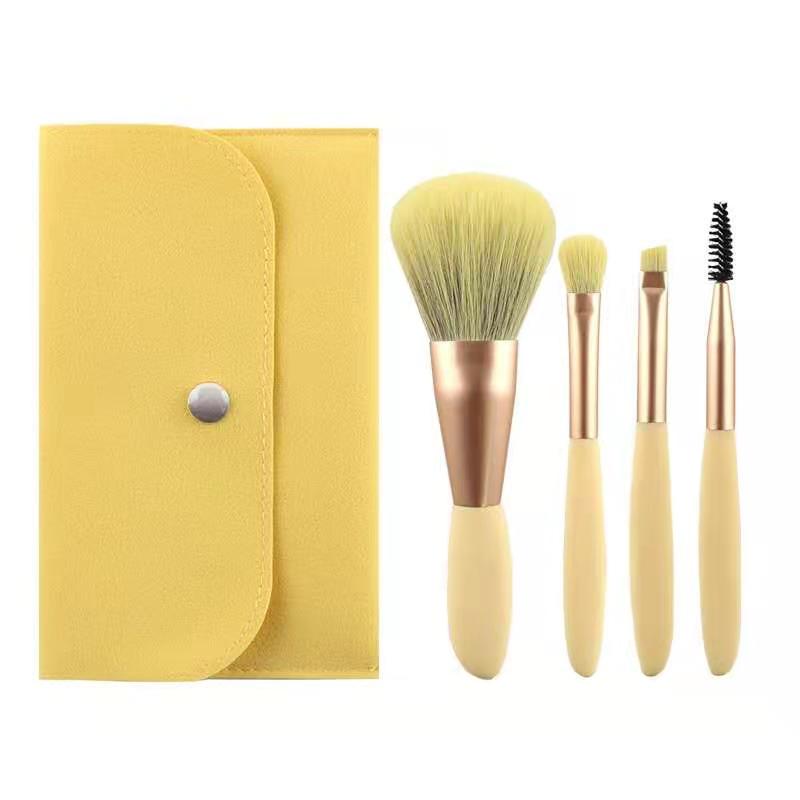
During the customization of makeup brushes, users may observe that, for identical handle dimensions, brushes with birch wood handles tend to be heavier than those with plastic (ABS or PP) handles.  
 
This observation appears counterintuitive, as the theoretical density of birch wood (~0.65 g/cm³) is lower than that of ABS or polypropylene (PP), which typically ranges from 0.9 to 1.0 g/cm³.  That is because most low and mid-range plastic brush handles are made via hollow injection molding with internal cavities, resulting in an overall density far below 1 g/cm³. In contrast, wooden handles are generally solid wood , hence heavier than lightweight plastic handles.
 
Therefore, during communicating with the makeup brush manufacturers, customers should firstly specify the exact material of the makeup brush handles.

Does the weight of makeup brushes affect the makeup result?

Yes, and the effect is quite significant. 
For makeup brushes of the same size: Heavy birch wood handles are heavier than lightweight hollow plastic handles. Their feel directly changes your makeup techniques and final looks.

1. Core differences caused by weight

① Heavy handle (solid birch wood handle)

It has natural downward gravity, so you don’t need to press hard on purpose. It picks up powder evenly, delivering smoother powder pressing, better skin adherence and softer blending. It ensures steadier application for eyeshadow, blush and contour without shaky hands.
Suitable for: Daily light makeup, delicate blending and makeup beginners.
Disadvantage: Slightly tiring to hold for a long time.
 

② Light handle (hollow plastic handle)

You have to fully control pressure with your own hand strength. It tends to cause excessive application, powder fallout and cakey makeup. It features high flexibility, ideal for fine detailing and outlining with angled brushes.
Suitable for: Experienced makeup users for precise shaping and partial highlighting.


2. Specific impacts on makeup effects

· Eyeshadow: Heavy handles deliver easy color payoff and soft gradients with gentle sweeps; light handles easily lead to heavy application and messy eye makeup.
· Blush & loose powder: Heavy handles press powder closely to skin for a natural non-caked finish; light handles tend to apply too much powder and create an unnatural look.
· Contour: Heavy handles create seamless transitions; light handles easily leave harsh dark lines.
· Makeup staying power: The gentle natural weight helps powder adhere better to skin for longer-lasting makeup.

3. Tips

· Beginners & those who prefer soft natural makeup → Choose makeup brushes with solid birch wood handles
· Pros & those doing bold makeup, cut crease looks or precise lines → Choose lightweight plastic-handled brushes
· Prioritize heavy handles for eye blending brushes; opt for light handles for angled detail brushes

A Concise Guide to Sourcing Chinese OEM Makeup Brush Factories

 If you are a salon owner or a procurement professional for cosmetics and makeup brands looking to develop custom-branded or OEM makeup brushes, Chinese makeup brush factories present a strategically advantageous choice. Leveraging China’s well-established manufacturing ecosystem and competitive pricing, these factories offer remarkable value—but with thousands of manufacturers across the country, identifying and evaluating the right supplier can be highly challenging. This article serves as a concise, purpose-driven guide to support your sourcing decisions.

 
OEM makeup brush manufacturing facilities in China are primarily concentrated in 4 key industrial clusters: Cangzhou (Qing County) in Hebei, Luyi in Henan, Shenzhen/Dongguan in Guangdong, and Yiwu in Zhejiang. Each cluster boasts distinctive competitive advantages, tailored to different order requirements and brand needs.
 
Cangzhou, Hebei
A time-honored makeup brush manufacturing base in northern China. It takes the lead in animal hairs including goat hair and squirrel hair. Featuring exquisite workmanship, it mainly focuses on mid-to-high-end makeup brushes and gathers numerous OEM factories serving big brands such as L'Oréal and Amway. Strengths: mature traditional craftsmanship & precise hair trimming technology, well-established customized animal hair solutions.
 
Luyi, Henan
Known as "China’s Makeup Brush Capital", it boasts the largest production capacity and supreme cost performance with an annual output of over 100 million pieces. It is ideal for large & medium batch orders, e-commerce brands and private label products. Strengths: full-range material availability (animal hair & synthetic fiber), standardized mass production and high cost efficiency.
 
 
Shenzhen & Dongguan, Guangdong
Dominant in foreign trade and cross-border business. Capable of full-spectrum material production and high-end customization, with prominent advantages in synthetic fibers and eco-friendly materials. Fully certified with ISO, BSCI and cruelty-free certificates, plus flexible MOQ requirements. Strengths: one-stop OEM/ODM services, 3D sample development, eco-friendly accessories (bamboo handles, recycled plastic) and antibacterial fiber materials. Welcome to customize and OEM makeup brushes from Kingyin, we locate in Dongguan, providing professional services for worldwide customers and brands.
 
Yiwu, Zhejiang
Fastest service for small-batch orders and in-stock private labeling. It offers low prices and diverse styles, perfectly suited for startup brands, influencer brands, live-streaming sales and gift brush sets.
 
 
Cangzhou excels in mid-to-high-end animal hair brushes, Luyi in large-batch, cost-effective production, Shenzhen/Dongguan in high-end customization and cross-border trade, and Yiwu in small-batch, fast-turnaround orders. By understanding the unique advantages of each cluster, buyers can efficiently narrow down their supplier options, streamline the sourcing process, and select a partner that best matches their brand positioning, order scale, and product requirements.


Why choose Kingyin as your Trusted OEM Makeup Brush Manufacturer?

 Kingyin is a national high-tech enterprise in Dongguan, a professional OEM/ODM manufacturer focusing on mid-to-high-end custom makeup brushes for global beauty brands.


I. Corporate Strength

· Establishment: Founded in 2014, relocated to Dongguan in 2017, merged with South Korea HNB in 2019; Certified high-tech enterprise valid from 2023 to 2026.
· Production Capacity: 8,000 ㎡ in-house factory with full bristle/ferrule/handle production. New Luyi production base annual output up to 46 million premium brushes.
· Trusted Clients: Stable supplier for L’Oréal, Estée Lauder, MAC, KIKO, Sephora, Target with 100% pass rate for factory audits.
· Global Certifications: Compliant with ISO9001, BSCI, SEDEX, FDA, REACH for worldwide sales.
 

II. Core Competitive Advantages

1. Full In-house R&D & Production, Stable Quality & Reliable Lead Time

Full in-house production covers all core parts (bristles, ferrules, handles) with zero outsourcing. We adopt GMP-grade dust-free workshops and 6S management to ensure consistent high quality. Sample: 5–7 days, bulk order: 20–35 days. All brushes deliver premium softness and superior powder pickup for high-end market standards.

2. Powerful Technological Innovation & High-end Customization Capacity

Combining Korean advanced technology and independent R&D, we specialize in bionic fiber, antibacterial and nano-coating materials. We support private mold, co-branded and limited-edition customization with fast 3–7 days sampling, matching innovative iteration needs of global brands and cross-border platforms.

3. Flexible Production Mode, Supporting Small-batch & Fast-response Orders

Low MOQ of 500 pieces for small-batch trial orders and mixed orders (makeup brushes, beauty blenders, powder puffs). Supported by Dongguan’s complete industrial cluster, urgent orders delivered in 15 days, helping clients reduce inventory risks.

4. Superior Location & Cost Performance, Maximizing Client Benefits

Automated production and cluster advantages cut labor cost by 30% vs Japanese & Korean factories. 1-hour access to Shenzhen & Guangzhou ports ensures fast, cost-effective export. As a certified high-tech enterprise, we enjoy policy support to guarantee stable long-term cooperation.

III. Target Cooperative Clients

· Mid-to-high-end beauty brands (offline counters & premium online lines)
· Cross-border sellers on Amazon, TikTok, SHEIN and other mainstream platforms
· Brands seeking stable quality, technical innovation and global certification

Kingyin is your reliable OEM/ODM partner for premium makeup brushes. With in-house R&D, strict quality control, flexible small-batch production and full global certifications, we perfectly serve mid-to-high-end brands and cross-border businesses with cost-effective, customized solutions.


Why Kingyin Is a Trusted OEM Manufacturing Partner for L’Oréal and Estée Lauder

 Kingyin has established itself as a strategic makeup brush OEM manufacturer for global prestige beauty brands—including L’Oréal and Estée Lauder—by consistently delivering excellence across five critical dimensions: uncompromising quality assurance, scalable and resilient production capacity, deep domain expertise in makeup brush craftsmanship, comprehensive customization capabilities, and vertically integrated cost efficiency—all rigorously aligned with the stringent operational and regulatory standards of luxury beauty conglomerates. 


15+ Years of Specialized Experience & Industrial Roots

· Founded in 2008, with 15+ years focused solely on makeup brush R&D and manufacturing.
· Originated in Henan, China—the core hub for high-quality goat hair processing, securing premium raw material supply
· Relocated to Dongguan (Guangdong) in 2018, gaining access to a mature manufacturing ecosystem and skilled labor pool

Rigorous Quality Control & International Certifications

· ISO 9001 certified and UKS audited, meeting global quality management standards.
· Full inspection system: incoming material check, in-process monitoring, and final product testing (38 quality checks per brush).
· Strict control over bristle softness, rebound, glue adhesion, and finish—critical for luxury brands.
· Consistently low defect and return rates, aligning with L’Oréal/Estée Lauder’s zero-tolerance policy.


Large-Scale Production Capacity & Stable Delivery

· 25,000 m² standardized workshop, 260+ skilled workers, annual capacity of 60 million pieces.
· Dual factories in Dongguan and Henan to avoid supply chain disruptions
· 90% of products exported to Europe, America, and Asia, with a proven track record of on-time delivery for large orders.


Mature Craftsmanship & Customization Capability

· Core artisans with 10+ years of handmaking experience (critical for high-end brush shaping).
· Full OEM/ODM service: custom bristle (natural/synthetic), ferrule (aluminum/copper), handle (wood/bamboo/metal), logo (silk-screen/hot-stamp/laser), and packaging
· Fast sampling (3–7 days) and flexible MOQs, supporting both mass production and limited-edition lines.


 Competitive Cost & Supply Chain Advantages

· Vertical integration: in-house raw material processing, production, and assembly, reducing intermediate costs
· Located in China’s manufacturing belt with easy access to high-quality, low-cost components (hair, ferrule, wood).
· Price advantage without compromising quality—key for brands balancing premium positioning and cost efficiency.


 Proven Track Record with Global Prestige Brands

· Long-term OEM partner for L’Oréal, Estée Lauder, Lancôme, and Shiseido, with a reputation for reliability and quality.
· Deep understanding of international brand standards, regulatory requirements, and market trends.


In summary, Kingyin meets—and consistently exceeds—the multifaceted requirements of world-class beauty OEM partnerships: scientific quality governance, industrial scalability, artisanal mastery, responsive innovation, and responsible cost leadership. This holistic capability profile positions Kingyin not merely as a supplier, but as a trusted, long-term strategic manufacturing partner to L’Oréal and Estée Lauder. 


2025年6月17日星期二

2025 New trends in USA makeup brush market

 Sales channel change: online platform competition intensifies, social e-commerce explodes


Amazon becomes the biggest retailer
Amazon is expected to surpass Walmart to become the largest beauty retailer in the United States with a 14.5% share in 2025. High-end brands such as Estee Lauder (Clinique) and L'Oréal (Kiehl's, Lancome) broke past boycotts and took the initiative to enter Amazon's Premium Beauty Store, controlling prices and brand image through official stores and combating the problem of third-party counterfeit and price gouging.
 
Driving factors: Prime members have reached 100 million independent monthly active users of beauty products, and the 30-45 age group relies on its evaluation system; 69% of Generation Z (13-18 years old) use their parents’ accounts to make purchases, becoming a new traffic entrance.
 
TikTok Shop becomes the engine of hot products, live streaming sales boom

The sales of beauty and personal care products on TikTok Mexico exceeded 250,000 units in a single month (an increase of 83.9% month-on-month). Maybelline's monthly sales in the U.S. reached US$2.18 million, with daily sales increasing tenfold.
 
Operation model: Relying on promotion by mid-level influencers (thousands of fans) + short-term promotions, such as 23,900 cleaning rags sold in a single week (+72.57% month-on-month)
 
Offline still focus on experience, but the function is changing
In 2023, offline channels accounted for 70% of makeup tool sales, and are expected to remain dominant in 2025; Sephora, Ulta Beauty, etc. have strengthened the "trial scenario" through AR makeup trials and professional shopping guides to meet the demand for online shopping.


Product innovation: integration of sustainable materials and intelligent technologies

Synthetic bristles dominate, eco materials accelerate penetration
Synthetic brushes account for 60% (2023), and the growth rate (CAGR 6.5%) far exceeds that of natural animal hair brushes (40%). Environmentally friendly materials such as bamboo handles and biodegradable packaging have become standard features of high-end brands (such as EcoTools), and stricter EU/North American environmental regulations have driven certification demand.
 
Intelligent + customized tools
AI-assisted tools: Shiseido's "Beauty AR Navigation" provides real-time guidance on makeup techniques; L'Oreal's Hapta smart brush is suitable for people with hand impairments.
3D printed customized brush head: The brush shape is customized according to user's facial structure, and the premium in the high-end market is 3-5 times that of ordinary brushes.
 
Minimalism and functional refinement
The star brand Rhode gained market recognition with its "few but good" strategy (only 10 SKUs) and was acquired by Elf Beauty for US$1 billion; niche functional single categories such as concealer brushes and tear trough brushes exploded (for example, the MakeupGirl concealer brush has monthly sales of more than 30,000).


Differentiation of consumer behavior: specialization, youth and cost-effectiveness

Generation Z becomes the core of decision-making

50% of consumers aged 13-18 turned to Amazon for purchases after being inspired by TikTok, seeking the convenience of "lightning delivery + parents pay"; preferring real makeup-free marketing (such as Rhode's natural light shooting strategy) and environmental protection;
 
Demand for professional tools surges
The professional makeup artist tools segment grew fastest (CAGR 6.2%), accounting for 35%; studio and individual users grew simultaneously, reflecting the popularity of DIY professional makeup.
 
Consumption polarization intensifies
Under the pressure of inflation, affordable makeup brushes (such as Elf with an average price of $6.5) and high-end smart brushes ($50-$150) coexist; the mid-range market is squeezed, and brands need to clarify their price positioning.


External challenges: Tariffs and supply chain risks

The tariff policy change
The USA new tariffs may increase the cost of China's imported brushes (China accounts for 50% of global makeup brush production)
 
Cost pressure of sustainable certification
The EU EPR and the US California Environmental Protection Act require makeup brushes to meet recycling standards, which increases the certification costs of small and medium-sized enterprises by 20%-30%.


Corporate strategy suggestions

Channel: layout "TikTok seeding + Amazon fulfillment" , and simultaneously consolidate Sephora and other high-premium offline channels.
Product: synthetic fibers+ smart chips to increase premium, develop professional subcategories such as concealer/contour.
Supply chain: flexible production to meet customized needs, set up factories in Southeast Asia to avoid tariffs.
Brand positioning: clarify the two polar markets of affordable (below $10) or high-end ($50+), and avoid mid-range melee.

2025年6月12日星期四

makeup brush market trend in 2025

 According to the latest industry analysis, the global makeup brush market will continue to grow steadily in 2025


Market Trend

Stable growth
The global makeup brush and makeup tool market size is about US$7 billion in 2024, and is expected to reach US$7.4 billion in 2025 and exceed US$10.1 billion in 2030 (CAGR 6.3%-6.5% from 2024 to 2030). The core drivers of growth are the popularization of beauty products, social media marketing (e.g. TikTok sells one beauty product every 2 seconds) and the expansion of e-commerce channels.
 
China leads the Asia-Pacific market
Chinese makeup brush production accounts for more than half of the world's total, and the market size is expected to grow by 6.29% in 2025, higher than the global average. Hebei Province (annual output value of 3 billion yuan) and Henan Province (annual output of 150 million sets, accounting for 50% of China) are the two major industrial centers, with exports accounting for more than 90%.


Regional markets

Region2023 ShareGrowth highlights
North America35%The United States leads the market (revenue of $1.2 billion in 2024), with strong demand for high-end makeup brushes
Asia-pacific30%The fastest growing, synthetic brushes account for 60%
Europe25%Germany is the largest consumer country (cosmetics sales of $16 billion in 2023), preferring environmentally friendly products
Middle East / Latin America5%-10%Emerging markets such as Saudi Arabia and Brazil are surging in demand due to the rise of social media beauty bloggers


Trends and Innovations

Material Upgrade:
Synthetic hair dominates the market (accounting for 60%): Due to the increased awareness of animal protection, high-quality synthetic fiber brushes are comparable to natural hair in performance, and are more environmentally friendly and easy to clean.

 Sustainable materials:
the demand for organic brushes with bamboo handles and degradable packaging is growing, which promotes brand R&D investment.

Intelligent and customized
AI integrated tools: such as Shiseido's "Beauty AR Navigation" to guide makeup techniques in real time; L'Oreal Hapta smart brush is suitable for people with hand disabilities.

3D printing customization: Customizing the brush head according to the user's facial features has become a new direction in the high-end market.


Consumer Behavior Change

Refined Demands

Shift from makeup brush sets to single functional brushes, accurately solving niche needs such as acne scars and nasolabial folds.

Professional makeup artist tools (accounting for 35% of the market) have the fastest growth rate (CAGR 6.2%), reflecting the parallel trend of DIY beauty and professional services.

Online channels
The proportion of online sales continues to increase, but offline sales are still dominant (65% in 2024) because consumers need to experience the touch.

Social media e-commerce has become a hot product engine: For example, BK Beautiful Brushes sells 2,800 sets a day through TikTok; Luyi makeup brush companies account for 48.2% of live streaming sales.


Competition & Top Brands

International brands: The top 5 companies such as L'Oreal and Estee Lauder account for 25%-30% of the market share, focusing on sustainable materials (such as Estee Lauder's Belgian Biotechnology Center) and AI technology.

Chinese brands: Hua Yang, Perfect Diary, etc. rely on cost-effectiveness and industrial belt supply chain advantages to seize the mid-end market. The profit margin from OEM factory to own brands increased by 30%.

Price competition: The mid- and low-end markets intensified, and the high-end market used technology premiums to resist risks (such as the price of smart brushes is 3-5 times higher than that of ordinary brushes).


Summary:

Opportunities: functional fine brushes (such as concealer detail brushes), environmentally friendly materials (bamboo handles/recycled fibers), smart tools (AI+3D printing) and emerging markets (Middle East, Latin America).

Risk warning: raw material fluctuations (increasing costs of natural hair), homogeneous competition, and increased costs of sustainable certification.
 
Enterprise strategy:
✅ Technology binding: integrating beauty technology to increase premium;
✅ Flexible supply chain: small batch customized production;
✅ Green certification: meeting EU/North American environmental regulations.
 
In 2025, the makeup brush industry will continue its evolution on "professionalization + sustainability + intelligence". China's makeup brush industrial will shift from cost advantage to dual drive of brand and technology, becoming the core force of global supply chain transformation.

2025年5月3日星期六

Tariffs on made-in-China makeup brushes entering the U.S. market

 The makeup brushes HS code is 9603.30.00:Makeup brushes (including eyelash brushes, powder brushes, etc.)

 
‌Base Tariff‌‌
According to the "reciprocal tariff" policy of the United States that came into effect on April 5, a 10% base tariff will be applied to goods from all countries/regions that have not signed a bilateral trade agreement.
 
‌Cumulative additional tariffs on China‌


The United States will impose additional tariffs on Chinese goods exported to the United States in stages in 2025:
‌20% extra tariffs in February-March 2025;
‌34% extra tariffs in April 2025.
‌After adding the original average tariff rate of 10.7% in 2024, the cumulative effective tariff rate reaches 64.7%.
 
‌Exemption Policy‌

The tax exemption policy for small items below $800 has been cancelled on February 4, 2025, and all Chinese imports are subject to tax regardless of the amount.
 
The exemption list announced by the United States does not explicitly include makeup brushes, so the relevant products are subject to full tariffs.
 
‌In summary‌: As of May 4, 2025, the total tariff rate for Chinese-made makeup brushes entering the U.S. market is approximately 64.7%, including the base rate and the cumulative additional tariff.
 
Impact

1. Taking high-end makeup brushes as an example, US importers will face a combined tax rate of 64.7% , resulting in a significant increase in end prices or compression of profits.
2. Due to the cancellation of the tax exemption policy for low-value makeup brushes (such as single-piece or small sets) in cross-border e-commerce channels, customs clearance costs and complexity have increased.
3. Chinese makeup brush manufacturers face a dilemma: raise prices and lose price competitiveness, or bear the costs themselves and see a decline in profits.
4. Some makeup brush manufacturers plan to transfer production to Southeast Asia or Mexico to avoid tariffs, but the import of raw materials and localized production still face challenges.
5. American cosmetics brands (such as Estee Lauder) may face rising costs in China due to China's retaliatory tariffs, while European and Chinese brands may take the opportunity to seize market share.
6. The global supply chain is accelerating regionalization, and low-tariff regions such as Southeast Asia and Central and Eastern Europe have become the focus of corporate layout